Corsi e workshop
Advanced fNIRS Data Analysis with Satori Software 2026
quando: →
dove: Hotel NH Collection Roma Centro, Roma
Overview
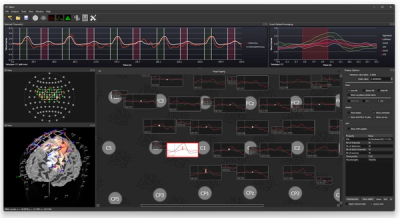
Join us for an intensive three-day workshop focused on mastering functional Near-Infrared Spectroscopy (fNIRS) data analysis using the cutting-edge Satori software platform. This comprehensive summer school is designed for researchers, clinicians, and students seeking to advance their expertise in neuroimaging data processing and statistical analysis.
Learning Objectives
Participants will gain hands-on experience with:
- Experimental Design & Data Preparation: Understanding fNIRS-specific experimental paradigms and data preprocessing workflows
- Statistical Modeling: Mastering the General Linear Model (GLM) for both single-subject and multi-subject analyses
- Artifact Management: Advanced techniques for motion artifact detection, visualization, and correction
- Connectivity Analysis: Exploring functional connectivity patterns and their practical applications
- Data Export & Integration: Seamless workflow integration with external analysis platforms (JASP, R)
Target Audience
This summer school is ideal for:
- Neuroscience researchers working with fNIRS technology
- Clinical professionals using neuroimaging in their practice
- Graduate students and postdocs in neuroscience, psychology, or biomedical engineering
- Data analysts seeking specialized training in neuroimaging statistics
Format
The program combines theoretical foundations with practical exercises, featuring invited expert speakers and hands-on analysis sessions. Participants will work with real datasets and receive personalized guidance from experienced instructors. The workshop concludes with a collaborative final challenge where participants apply their newly acquired knowledge to complex analytical problems.
Exclusive Benefits
All participants will receive a complimentary Satori software license valid until December 31, 2026, allowing continued exploration and application of the techniques learned during the workshop. This extended access ensures participants can implement their new skills in their own research projects and fully evaluate the software's capabilities.
Venue
Hotel NH Collection Roma Centro - A premier conference venue close to Vatica City and easy to reach using the Lepanto Metro station in Rome.
Registration & Information
Limited seats available. Prior experience with neuroimaging data is recommended but not required. All analysis software and datasets will be provided.
Programma
Giorno 1 07/10/2026
- 09:0045 min
Opening Session: Introduction and Overview
Join event organizers for an introduction to the three-day intensive program. Overview of learning objectives, software capabilities, and what participants can expect from this comprehensive fNIRS analysis training experience.
Jose Raul Naranjo
- 09:4545 min
Loading and checking data in Satori
Leo Van Brussel
- 10:3030 min
Coffee break
- 11:0060 min
Data quality evaluation in- and outside of Satori
Armin Heinecke
- 12:0090 min
Lunch break
- 13:3060 min
Exercise 1: Loading and inspecting a dataset
Armin Heinecke, Jose Raul Naranjo, Leo Van Brussel
- 14:3045 min
Data Preprocessing and WFM
Jose Raul Naranjo, Leo Van Brussel
- 15:1545 min
Exercise 2: Preprocessing and evaluating results
Hands-on practical session where participants apply GLM techniques to real fNIRS datasets. Work through the complete analysis pipeline from model specification to statistical inference, with guided instruction and personalized support from expert instructors.
Armin Heinecke, Jose Raul Naranjo, Leo Van Brussel
- 16:0030 min
Coffee break
- 16:3045 min
Fundamentals of fNIRS analysis
Introduction to the statistical foundation of fNIRS analysis. Learn the theoretical principles of GLM, how to model neural responses, design matrices construction, and basic statistical inference for single-subject neuroimaging data analysis.
Armin Heinecke, Jose Raul Naranjo
- 17:1515 min
Open question and discussion
Interactive session for clarifying concepts, addressing participant questions, and discussing practical challenges.
Armin Heinecke, Jose Raul Naranjo
Giorno 2 08/10/2026
- 09:0045 min
1st level data analysis: General Linear Model
Armin Heinecke
- 09:4545 min
Exercise 3: Single Subject GLM in Satori
Armin Heinecke
- 10:3030 min
Coffee break
- 11:0060 min
2nd level data analysis: The Multi-Subject Data Analysis: Theoretical background
Armin Heinecke
- 12:0090 min
Lunch Break
- 13:3060 min
2nd level data analysis: Multi-Subject Data Analysis: Practical application
Armin Heinecke
- 14:3060 min
Exercise 4a: Multi-Subject GLM in Satori
Armin Heinecke, Jose Raul Naranjo, Leo Van Brussel
- 15:3015 min
Coffee break
- 15:4560 min
Exercise 4b: Multi-Subject GLM in Satori
Armin Heinecke, Jose Raul Naranjo, Leo Van Brussel
- 16:4530 min
Questions and Discussion
Interactive session for clarifying concepts, addressing participant questions, and discussing practical challenges. Share experiences, troubleshoot analysis issues, and engage with instructors and fellow participants about GLM implementation and best practices.
- 19:00300 min
Social Event
Giorno 3 09/10/2026
- 09:0060 min
Connectivity Analysis in Satori
Jose Raul Naranjo
- 10:0045 min
Exercise 5: Connectivity Analysis
Leo Van Brussel, Armin Heinecke, Jose Raul Naranjo
- 10:4530 min
Coffee break
- 11:1545 min
Using Python within the GUI and WFM
Armin Heinecke
- 12:0090 min
Lunch break
- 13:3060 min
Data Export and External analysis options
Armin Heinecke
- 14:3060 min
Interactive Data Session
Armin Heinecke, Jose Raul Naranjo, Leo Van Brussel
- 15:3030 min
Coffee break
- 16:0030 min
Final Q&A and discussion
Armin Heinecke, Jose Raul Naranjo, Leo Van Brussel
Relatori

Jose Raul Naranjo
Scientific Consultant · Artinis-NIRx
With a background in Physics and postgraduate studies in Cognitive Neuroscience, Jose has focused his academic and professional career on understanding the human brain. During over a decade in research, he investigated the dynamics of neural networks using EEG, alongside studies on motor control, interpersonal cognition, and the effects of contemplative practices on self-perception. He later transitioned into the neurotechnology industry, taking on roles in scientific consulting and product management - first in EEG at Brain Products. More recently, he joined NIRx to help push the boundaries of fNIRS technology and its applications.

Leo Van Brussel
Scientific Consultant · Artinis-NIRx
Leo earned his Master’s degree in Brain and Cognitive Sciences from the University of Amsterdam. He then worked for two years as Scientific Consultant for NIRx, after which he returned to academia to do a PhD in Marketing, specializing in Neuroeconomics and Consumer Neuroscience using fMRI. Recently he joined the partner team of Artinis-NIRx, working together with distribution partners worldwide to push the boundaries of neuroimaging technology and empower researchers to seamlessly conduct their research projects.

Armin Heinecke
Scientific Support Consultant · Artinis-NIRx
- Psychology at Technical University of Braunschweig
- Interests: Experimental design, Methods and Statistics
- PhD in 2000 (Subliminal Processing and Attention)
- Support Consultant at Brain Innovation from 2001 to 2022
- Started as Scientific Support Consultant at NIRx GmbH in March 2022